
On Sunday November 1 2026, Antigua and Barbuda turns forty-five as an independent nation and it is indeed a proud moment. The moment is even more special this year as on the same day we host the Commonwealth Heads of Government Meeting (CHOGM), a gathering of heads of government from fifty-six nations with close to six thousand delegates. We are the smallest nation ever to host this meeting, which is no small feat, and those who have labored for months to make it happen deserve our thanks.
As CHOGM approaches I find myself thinking about a calypso from the land of my birth, St. Vincent and the Grenadines. It’s a calypso by the artist Sulle, a 1986 song he called Come Again Elizabeth. In 1985 the Queen of England, Elizabeth II toured the region on the heels of the Commonwealth summit in Nassau, and she stopped in St. Vincent. The country was scrubbed, potholes patched, vagrants picked up and placed out of sight, and fresh paint flung on every wall her motorcade might pass. Sulle’s widely shared conclusion was, “Come again, Elizabeth. Come again, and again, because only when you come, we get things fixed.”
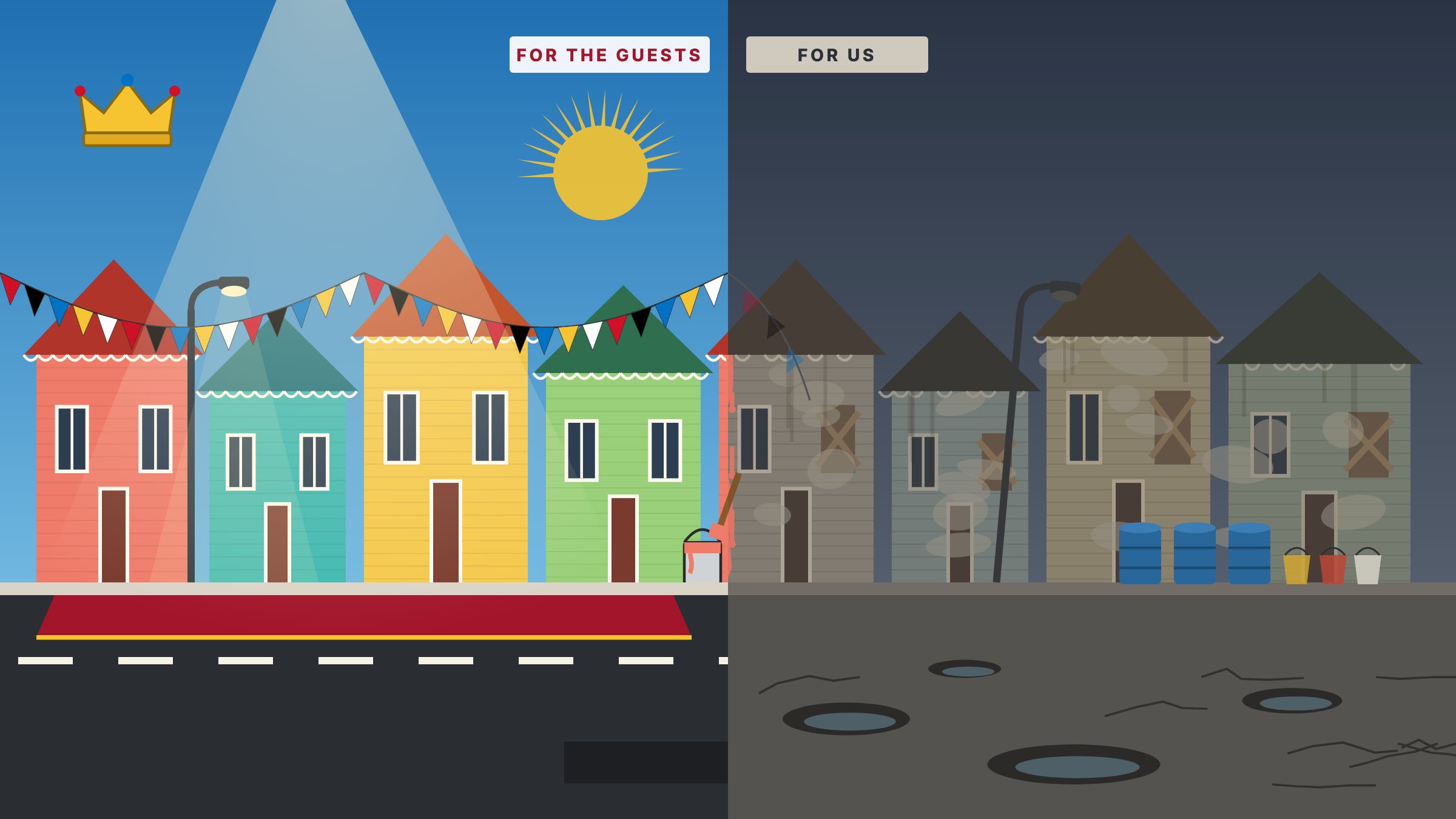
The catchy chorus was as precise a piece of political economy as any academic journal article the region has produced. It goes to the heart of the notion of an Endurance Economy where locals are forced to endure unreliable services and a variety of challenges, but many things can get fixed and resources found to so do, as soon as a stranger is expected at the door? As one commentator in Barbados put, why can’t we, the locals, have nice things too.
Forty-one years on, the summit is not in Nassau this time, it is here in Antigua and Barbuda and the stranger at the door is not one monarch but the whole Commonwealth, with the world’s cameras close behind. We know the choreography only too well. The reality of the modern Caribbean is that the roads the motorcades will drive past are given a hasty patching which will not last beyond the event, and worse the road to the village school not on the visitor route continues to wait its turn. Resources are miraculously found so that the streets inside the security zone are swept and painted, while the yard two streets behind still waits on the water truck. The slumlord who kept that smelly building for decades or business places that were strangers to paint for decades are suddenly and amazingly in pristine condition. Workers who set world records in lateness, absenteeism and low productivity are showing up on time and slaving around the clock because the country cant look bad for CHOGM.
The “guest treatment” seems to run deep in Caribbean society. I am sure many readers of my generation grew up in households where the best was kept for guests, and parents and grandparents died with cups and dishes no household resident, including themselves, ever got to use. I am thinking that we can call the national version of this development by audience, a deeply ingrained habit of building a set, performing on it, and dimming the lights when the guests fly home.
The key insight I want to share is that we are getting things backwards, as Caribbean people say. We behave as though we must first make the country beautiful and convenient for the visitor, and that our own comfort will arrive afterward as a reward. However, if we make the country beautiful and convenient for the Antiguans and Barbudans who live here, we will have as by-product, a country the whole world wants to see. The satisfied tourist should be by-product of a beautiful and convenient country as nobody ever had to be persuaded to visit or return a place whose own people plainly love living there.
If we can find the resources when visitors come, is it too much to ask that we find the resources to build the country for the Antiguan and the Barbudan with public schools that teach, water that runs from the tap every day, streets a woman can walk at night, hospitals that heal and a waterfront made lovely for no better reason than that we deserve loveliness. The streetlights should work because our parents, grand-parents, children and friends walk those roads and the water should run because our families need it. We should take pride in our beaches, buildings and neighborhoods because we live here, work here and swim here. We should make and keep the city beautiful because it is ours and we deserve nice things too whether a summit or cruise ship is coming, we deserve them simply because we live here.
Sulle’s punchline was that we should keep inviting Elizabeth back, since she was the only one who could get the road fixed. The question for Antigua and Barbuda at age 45 is whether we are ready to build a country for us that live here that we can be proud to host other in, whether we fix things for ourselves because we deserve it or we still need not wait on royal itineraries.
So come again, Your Majesty, and welcome. But next time, we will have fixed the road ourselves.